Each month we manage a multitude of marketing briefs, requests, and general intake forms for our clients. What’s changed since we first wrote about this topic isn’t the fundamentals of good briefing; it’s how briefs get created, filled out, and routed.
In 2026, marketing teams are no longer just digitizing paper-based intake. AI-assisted intake now drafts a first pass of a brief from a short prompt or a pasted email thread, flags missing fields before a request is even submitted, and routes work automatically based on what the brief contains. Generative AI has also introduced a new category of request altogether: briefs that exist specifically to govern AI-generated content, so teams can move fast without losing brand and legal control.
Here are the top briefs and request forms we see that save marketing teams 30%+ in admin time and ensure work is on-brand, on-strategy, and compliant; including the newer forms that have emerged as AI has become part of the everyday content workflow.
Master/Concept Brief
This cornerstone brief lays out the big-picture goals, unique selling proposition, insights, timelines, and budget. It’s the North Star that guides all the work that comes after it. Once this is finalized and honed, life gets easier and work flows through the system more smoothly when campaigns and tasks “hang off” the Master Brief. Increasingly, teams use AI to summarize prior campaign performance and insights directly into this brief, so strategy is grounded in data rather than assumption from day one.
Campaign Brief
Often created in conjunction with the Master Brief, the Campaign Brief focuses on a specific marketing campaign: objectives, strategy, and tactics, along with the creative concept, target audience, budget, and success metrics.
Task Brief
A tactical and practical brief that breaks down specific tasks and actions needed to get a project done — deadlines, deliverables, and team responsibilities. Elements from the Master or Campaign brief – such as the single minded proposition or details of the target market can automatically be created.

Quick Brief
The often-reached-for Quick Brief is a streamlined document that hits the highlights of a project in a condensed format — a marketing cheat sheet, if you will. These are now frequently generated automatically: a requester describes what they need in plain language, and an AI-assisted form fills in the structured fields for review rather than requiring someone to complete a blank template from scratch.
Digital Brief
If your focus is online marketing, this is your go-to. The Digital Brief zeroes in on the target audience, channels, budget, and key performance indicators for digital campaigns. It falls under the umbrella of a Campaign Brief but carries its own considerations specific to digital channels — including, increasingly, how content will perform in AI-driven search and answer engines, not just traditional SERPs.
AI Content Generation Brief
A newer addition, and one we’re seeing adopted fast. As teams use generative AI tools to draft copy, images, and video, this brief captures what was generated, which tool or model produced it, the prompt or reference assets used, and who reviewed it before it went into a campaign. It exists to answer a simple but increasingly important question: can we prove where this content came from? That provenance record matters for brand consistency, for responding to takedown or rights requests, and for the compliance and legal reviews regulated industries already run on human-created content. Alternatively, AI origination details can be integrated in the above mentioned briefs.
Consent Forms
This form ensures all parties involved in a project have given consent for the use of images or video footage. It’s essential to managing legal and compliance risk and can be linked to individual assets and campaigns — including AI-generated or AI-modified likenesses, where consent requirements are under increasing regulatory scrutiny.
Marketing Risk Assessment
Helps you identify potential risks that could arise during a marketing campaign and lays out strategies for mitigating them. For campaigns involving pricing, guarantees, or other claims — and now for campaigns involving AI-generated claims or imagery — this is a “must-have” workflow. AI-powered risk scoring can flag likely issues (unsubstantiated claims, missing disclaimers, off-brand tone) before a human reviewer ever opens the file, cutting review cycles from days to minutes.
Disclaimers
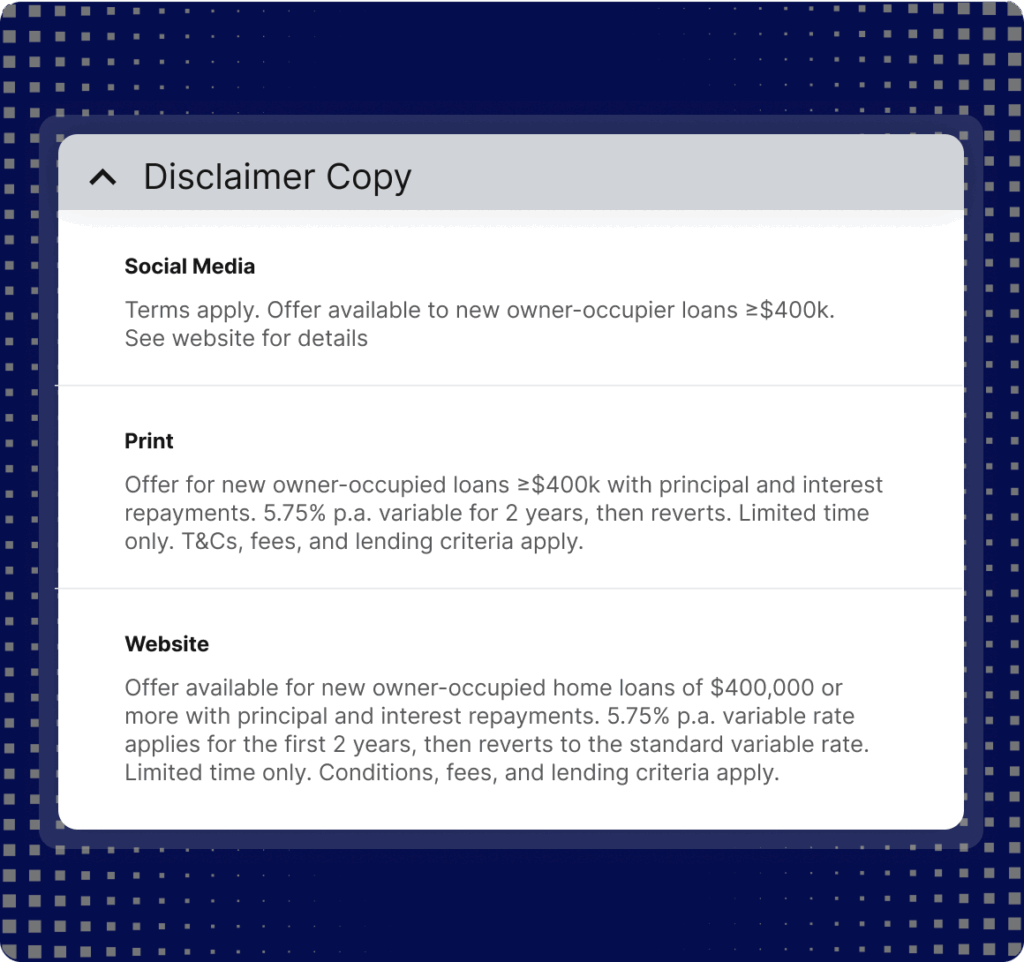
Critical legal statements covering product liability, warranties, and intellectual property rights. These can be linked to briefs or tasks and surface automatically when a brief meets certain conditions — for example, a price comparison ad, or a piece of content flagged as AI-generated where disclosure is required by an industry regulator or ad platform.
Photography Upload Form
Manages the upload and distribution of images, ensuring everything is properly attributed and compliant. Increasingly paired with automated logo, brand-mark, and rights-metadata detection at upload, so misuse is caught before an asset is published rather than after.
The “Ask the Team” Intake Form
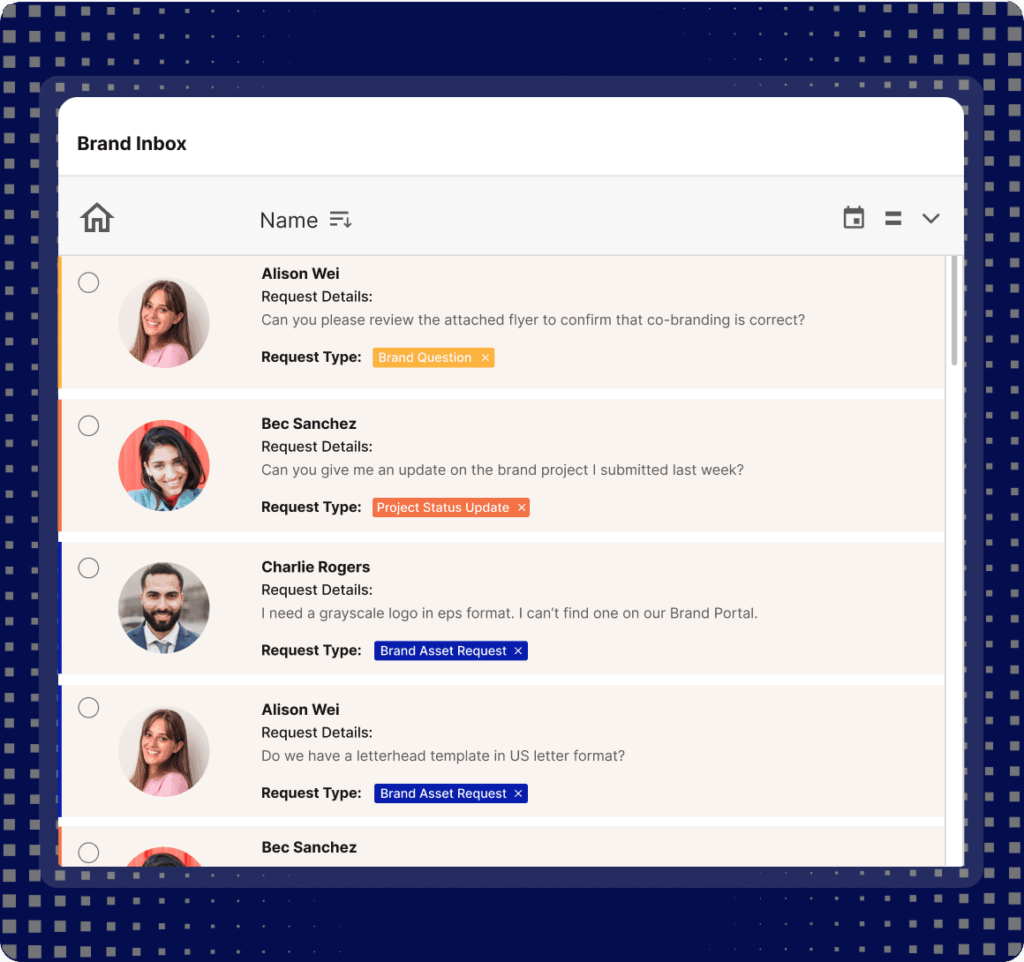
A great tool for getting out of email and into a system. By prompting people with the questions they need to answer, marketing teams work faster and cut back-and-forth and admin time by 30%+. In 2026, the best versions of this form use conversational, AI-assisted intake — the requester describes what they need in natural language, and the system asks clarifying follow-up questions and routes the finished brief to the right queue automatically.
Studio/Creative Brief
A comprehensive brief, often linked to a master or campaign brief, that lays out everything from color schemes to typography to style guidelines.
The Agency Brief
Key to ensuring an agency has what it needs to brief in creative — scope of work, deliverables, timelines, and budget.
Data Brief
Data privacy and security remain top of mind, especially for SMS campaigns, email marketing, partner campaigns, and audience segmentation projects. The data brief ensures all customer data handling aligns with privacy mandates and that data is used appropriately — a requirement that’s only grown more complex as AI tools increasingly touch first-party data during personalization and segmentation.
Insights Brief
All great creative starts with unique customer insights. Use insights briefs to check whether data points about customers already exist, or to request new research — to support campaigns, AB testing, and increasingly, to ground AI-generated creative in real audience data rather than generic output.
Good briefing ensures people follow best practices and speeds up creative approvals — and bad briefing can still cost marketing teams real budget in rework and wasted agency hours. What’s changed is that marketing operations technology can now do more of the brief-building itself: drafting a first pass from a prompt, flagging missing information, routing requests automatically, and creating a provenance trail for AI-assisted content. Combine strong briefing discipline with AI-assisted intake and workflow automation, and you get real efficiency alongside stronger compliance — not one at the expense of the other.
If you want to learn how the pros do it, get in touch or check out our article on master briefs and agile marketing.
Frequently Asked Questions
What is the most important marketing brief for a new campaign?
The Master/Concept Brief, since every other brief on this list: campaign, task, digital, creative — should hang off its goals, audience, and budget.
Do briefs need to change for AI-generated content?
Yes. Teams generating copy, images, or video with AI tools increasingly use a dedicated AI Content Generation Brief to record what tool was used, what prompt or source assets it drew on, and who reviewed the output — creating a provenance and compliance record that traditional briefs weren’t designed to capture.
How much time can better briefing and intake save a marketing team?
Teams that move from email-based requests to a structured, AI-assisted intake form typically report cutting admin and back-and-forth time by 30% or more.